The problem most sites suffer from is not related to traffic but rather conversion. Traffic comes to the site, does some scrolling and leaves without filling forms or making purchases. And nobody knows exactly why.
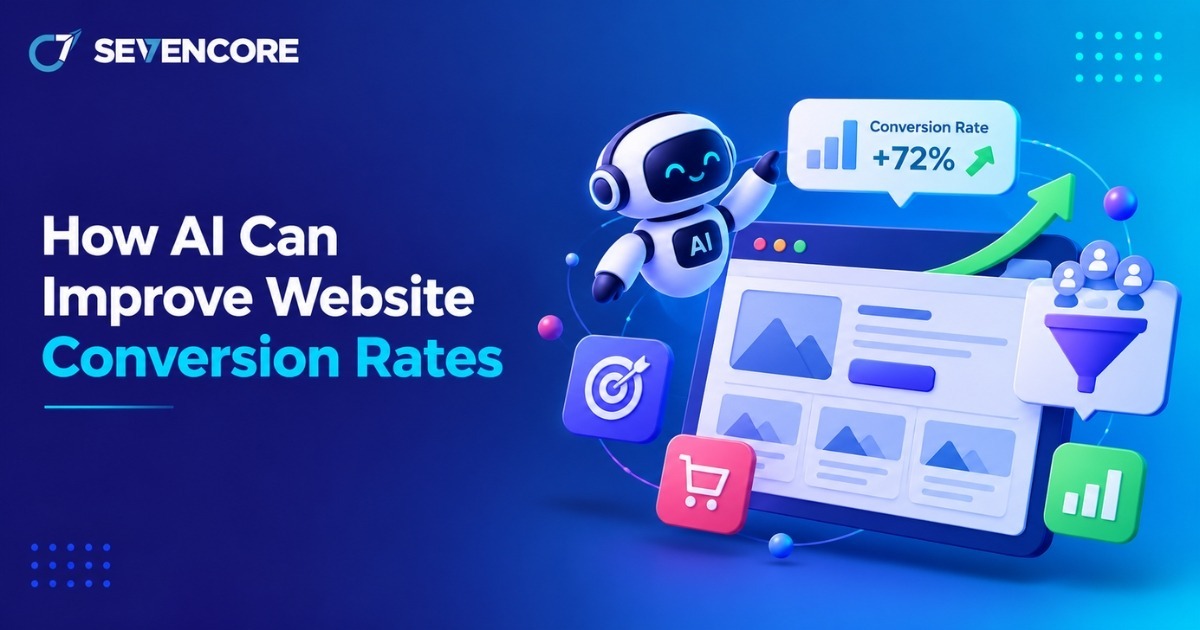
AI is changing this paradigm. CRO means conversion rate optimization and is an attempt to optimize the site in such a way that more people will take certain actions: become leads, subscribers, or customers. The application of AI technologies to CRO accelerates the process and makes it more data driven. AI monitors the behavior patterns during thousands of sessions, enables personalization, predicts intentions using analytics, and speeds up the process of testing. If a website development agency creates such capabilities from the very beginning of the creation of the site, its development will not end with constant redesigning of it.
What Is AI-Powered Conversion Rate Optimization?
AI based CRO applies machine learning to learn about the behavior of your website visitors and make recommendations for modifications that can encourage more people to convert.
The conventional CRO method involves manual analysis. The marketer analyzes the reports, develops an assumption, and implements tests one at a time. On the other hand, AI based conversion rate optimization happens on a far grander scale. It tracks clicks, scrolling behavior, navigational paths, identifies problems (for instance, a form field that deters users from going further), and suggests solutions based on their potential impact. “Conversion” can be defined as per the objective of your website, but some common examples include:
- Product purchases
- Contact form submissions
- Demo requests
- Subscriptions to newsletters
How Can AI Improve Website Conversion Rates?
Personalize Website Experiences
Generic pages do not address any specific individual. AI can tailor information, suggested products, and CTA according to the viewing history, source, and behavior of the visitor. For a new visitor, the page can present bestselling items along with a simple offer. A returning visitor will be served with products that relate to his last session. McKinsey reports that 71 percent of consumers have an expectation of getting personalized experience and 76 percent are irritated by its lack.
Analyze Visitor Behavior and Identify Drop-Offs
The tools that are used for the analysis of such things like click tracks, scroll depths, navigation trails, and user sessions operate much faster than any human being would be able to do it. They detect the odd designs, broken forms, and the page with a high bounce rate. And only after this information is obtained the developers can act upon the facts.
Improve Landing Pages With AI
Generative AI is able to produce various ideas for headline, copy, CTA, or layout design within minutes and also highlight which of them convey the unique selling proposition best. Use them as your hypothesis, but not as your answer, because even if something is good in terms of AI model it still needs to be proved by visitors.
Automate A/B Testing and Experimentation
AB testing entails offering varying versions of the page to your visitors and analyzing which one works best. Artificial intelligence will play a crucial role in the whole AB testing process because it is used throughout the entire process from conception through to the analysis of the outcome. You can test a number of factors including headings, the call to action button wording, form designs, layouts, and offers among others.
Use AI Chatbots to Capture More Leads
The perfect chatbot should be able to answer the frequently asked questions, recommend relevant services, and then qualify leads for making a demo appointment. There are two key things that need to be remembered. Firstly, the chatbot should be trained on the right data; and secondly, there should always be a way out to connect with a human. It is better not to give an answer than giving an incorrect one.
Optimize Website Content and Calls to Action
Generative AI may give you a variety of headlines, descriptions, and CTA text that meet the purpose of the visitor. If the person is reading your blog post, he may still be conducting his research. In this scenario, “Explore Services” may be applicable. On the other hand, if the person is on the pricing page, then he is prepared to make a purchase.
Improve Mobile UX and Website Performance
Mobile users are typically the most impatient. With AI analytics, we can see where the pain points exist specifically for mobile devices: tap targets too small, forms which are a nightmare to complete on a smartphone, or web pages that load slowly on mobile connections.
Predict Visitor Intent and Reduce Abandonment
Predictive analytics looks for patterns connected to purchase intent or abandonment, like revisits to pricing page or pause at checkout time. You can react to that with some useful tips, suggestions that might be relevant, or even improved navigation. Forget about those annoying exit popups, and never confuse your predictions with statements on an individual.
How a Website Development Company Can Use AI to Improve Conversions
AI technologies only offer value once they are implemented into the website. The right development team is able to:
- Embed AI driven analytics and personalization into website design
- Develop intelligent chatbots and automated lead qualification procedures
- Enhance landing pages, forms, navigation and checkout experience
- Link website actions with CRM and marketing automation systems
- Ensure privacy, security, accessibility and control by people
The true benefit of the technology lies in the combination of implementation with continuous testing. AI website optimization is not a one time job. It is an ongoing process of testing and retesting.
Best Practices for Using AI in Conversion Rate Optimization
- Define one distinct target. “‘Increased engagement’ cannot be used as an objective while ‘increase demo bookings’ is.”
- Work on credible metrics with a sufficient amount of data. Small samples give biased conclusions.
- Base actions on visitor needs and their impact on a business. Prior to changing buttons, solve any problems in the checkout process.
- Do not implement AI recommendations without testing them first.
- Ensure data security and provide transparent information about the practices according to GDPR/DPDP.
- Validate AI generated content for accuracy, consistency, accessibility.
- Continue monitoring. Visitor behavior changes, and website strategy must change as well.
Conclusion: Turn Website Insights Into Better Conversions
With AI, you will understand your customers’ desires and pain points much better. You can achieve personalization, behavioral analysis, quick testing, and better lead generation with it. However, for maximum efficiency, you will need not only powerful AI technology but great UX design, solid analytics, and your common sense too.
An experienced Website development company can use your knowledge gained through AI to make your website more efficient with each coming month. Are you ready to see how AI can help you? Sevencore is the best option for AI driven website development and conversion optimization services!
Frequently Asked Questions
1. How does AI improve website conversion rates?
AI analyzes visitor behavior at scale, personalizes content, speeds up A/B testing, and captures leads through chatbots. Together, these reduce friction and make every visit more relevant.
2. What are the best AI tools for conversion rate optimization?
Popular options include VWO and Optimizely for experimentation, Hotjar and Microsoft Clarity for behavior analysis, Dynamic Yield for personalization, and HubSpot or Intercom for AI chat. The best fit depends on your traffic, budget, and tech stack.
3. Can AI personalize website content for different visitors?
Yes. AI can tailor headlines, recommendations, and CTAs based on device, location, traffic source, and browsing history, provided you have proper consent and follow privacy rules.
4. How can a web development agency use AI to generate more leads?
By building AI chatbots, smart forms, personalized landing pages, and CRM integrations that capture, qualify, and route leads automatically.
5. Does AI guarantee a higher website conversion rate?
No. AI improves your odds through better insights and faster testing, but results still depend on traffic quality, your offer, UX, and how consistently you test.