Web design has quietly crossed a threshold most businesses have not fully registered yet. 93% of web designers now use AI tools in their workflow, and by the end of 2026, generative AI is expected to reshape 70% of the design and development effort for new web apps. Worldwide AI spending is projected to hit $2.52 trillion in 2026 alone, a 44% year-over-year increase, and sites crawled by AI systems already generate 320% more human traffic and 250% more click-to-call events than sites that are not. This is not a distant trend anymore, it is the operating reality shaping how websites get built, discovered, and used right now. This guide breaks down where AI-powered website design actually stands today and where it is heading through 2027.
What AI-Powered Website Design Actually Means Today
AI in web design spans a wide range of applications, from generating full page layouts to automating accessibility checks, and understanding the breadth of this shift clarifies why adoption has moved so quickly.
Where AI Is Already Doing Real Work
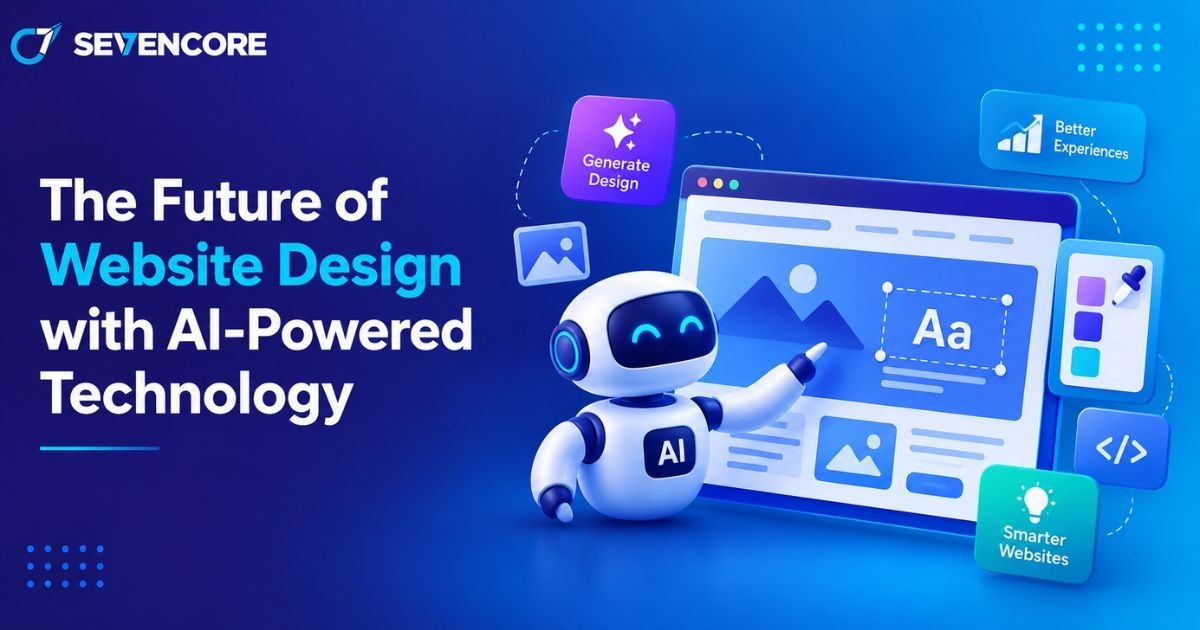
- Generating complete web page designs from a written prompt or brief, with 51% of designers already using AI this way
- Producing rapid layout variations and testing them against design systems before a human ever opens a design file
- Automating accessibility audits that would otherwise require extensive manual review
- Personalizing on-site content and imagery dynamically based on visitor behavior and context
Why Adoption Has Accelerated So Quickly
Several forces are converging at once to push AI-powered design tools from experimental novelty to standard practice across the industry.
- 72% of designers now use generative AI in their workflows, and 91% say it improves the quality of their output, not just their speed
- 58% of small businesses use generative AI today, up from just 23% in 2023, more than doubling in two years
- 85% of designers and developers say learning to work with AI will be essential to their future success in the field
- Teams using AI tools report reclaiming an average of several hours per week, time increasingly redirected toward strategy and refinement rather than manual production
From Static Pages to Agentic, Task-Executing Websites
One of the more significant shifts underway is the move from websites as static, browsable pages toward systems capable of executing tasks directly for the visitor.
- AI-driven trends in 2026 are shifting websites from static pages toward agentic systems that can execute tasks like building a cart or resolving a support request
- Zero UI, sometimes called ambient computing, represents websites that read context and predict needs rather than relying entirely on menus and buttons
- Voice interaction is expected to become a mainstream expectation, with well over 150 million people in the US alone regularly using voice assistants by the end of 2026
Where Human Judgment Still Matters Most
Despite rapid adoption, the data consistently shows that AI output alone is not yet a finished product, and human oversight remains central to quality outcomes.
- Only 40% of designers feel AI actually improves the quality of their work, even as efficiency gains are widely reported
- 94% of designers and marketers still carefully review and refine AI-generated outputs to protect brand consistency and safety
- In the design phase specifically, AI is used most for generating raw assets and rough drafts, roles that still require human refinement before anything ships
AI Website Design and Search Visibility Are Now Connected
The relationship between how a site is built and how visible it becomes in search has grown tighter as AI reshapes both design workflows and discovery itself.
- One in four customers already turn to AI-powered platforms as their primary source when searching for information or making purchase decisions, surpassing brand websites and online reviews for that role
- Sites optimized for AI crawling generate significantly more human traffic and conversions than sites that are not, since the same clean, well-structured foundation that helps AI systems parse a site also improves the experience for human visitors
- Performance fundamentals, including sub-2.5 second load times, remain a baseline requirement for competitive web experiences in 2026, regardless of how AI-assisted the design process itself was
Common Pitfalls as Businesses Adopt AI-Powered Design
Rapid adoption has also surfaced a consistent set of mistakes businesses make when leaning too heavily on AI tools without the right oversight.
- Publishing AI-generated layouts or content without human review, resulting in generic, inconsistent output that fails to reflect brand identity
- Treating AI as a replacement for strategy rather than a tool for faster execution, leading to sites that look polished but lack a clear conversion pathIgnoring accessibility gaps that AI tools flag but do not automatically fix, since 95.9% of home pages still show detectable accessibility failures industry-wide
- Underinvesting in the technical foundation, since fast AI-generated layouts still need
- genuinely fast-loading, well-structured code underneath them to perform in search
What This Means for Businesses Choosing a Development Partner
As AI reshapes design workflows industry-wide, the gap between agencies genuinely integrating these tools thoughtfully and those simply outputting AI-generated templates without refinement is widening. Working with the best website development service provider for a specific platform ensures AI-assisted speed is paired with the strategic and technical judgment that data consistently shows still separates a rough AI draft from a genuinely effective website.
- Ask how a potential partner uses AI tools specifically, for ideation and drafts, or as a substitute for human design review entirely
- Confirm that AI-assisted output still goes through structured testing for accessibility, performance, and brand consistency before launch
- Prioritize partners transparent about where AI speeds up their process and where human expertise remains essential
Evaluating an AI-Powered Website Design Service
Not every provider claiming AI-powered design capability applies the same rigor to the output those tools produce. When evaluating the best AI-powered website design service for a project, ask directly how their process balances AI-generated speed with genuine strategic input, since the data is clear that unreviewed AI output alone rarely matches what a thoughtfully guided AI-assisted process can deliver.
Why Trust Still Matters More Than Ever
As AI makes it easier for any provider to produce a visually polished website quickly, the harder differentiator has become trust, both in the quality of the underlying strategy and in a partner’s track record delivering results beyond the initial design. Businesses evaluating a trustable web design firm should weigh demonstrated experience and client outcomes as heavily as the design tools a provider claims to use, since impressive AI-generated mockups say little about whether the finished site will actually perform once real users and search engines interact with it.
Frequently Asked Questions
Is AI replacing web designers entirely?
No. Current data shows AI significantly speeds up drafting and ideation, but the vast majority of designers and marketers still review and refine AI-generated output manually to ensure quality and brand consistency, indicating a collaborative rather than a fully automated shift.
Does using AI in web design improve search rankings?
Indirectly, yes. AI tools can accelerate building sites with strong technical foundations, such as fast load times and clean structure, both of which are ranking factors, but AI-generated design alone does not guarantee good SEO without proper implementation and review.
What should businesses prioritize when adopting AI-powered design tools?
Businesses should prioritize pairing AI-generated speed with human strategic oversight, testing AI output against accessibility and performance standards, and avoiding the assumption that faster output automatically means better output.
What to Expect Through 2027
The trajectory suggests AI-powered design tools will continue moving from optional enhancement to default expectation across the industry, with adoption already exceeding 90% among professional designers. The businesses and agencies that will differentiate themselves going forward are unlikely to be the ones simply using AI tools, since that has become close to universal, but the ones combining AI-driven speed with the strategic judgment, accessibility rigor, and technical foundation that consistently separate a genuinely effective website from a fast but generic one.
Conclusion
AI-powered website design has moved from an emerging trend to a near-universal practice within a remarkably short window, reshaping how sites are conceived, built, and discovered. The data is consistent across every major study, adoption is high, efficiency gains are real, but human judgment remains the deciding factor between a rough AI draft and a website that actually converts and ranks. Businesses navigating this shift are best served by partners who treat AI as a genuine accelerant to good strategy, not a replacement for it.
Suggested Sources for Citation
- Figma, 60+ Web Design Statistics for 2026 – figma.com/resource-library/web-design-statistics
- Foursets, 100+ Web Design Statistics for 2026: Key Numbers & Facts – foursets.com/blog/web-design-statistics
- Hostinger, AI Website Builder Statistics: Growth, Adoption, and Trends – hostinger.com/blog/ai-website-builder-statistics
- Coalition Technologies, Web Design Trends 2026 | AI in Web Design – coalitiontechnologies.com/blog/2026-web-design-trends