For customers, the first point of contact for any company happens via their website. However, having a well designed website does not suffice anymore. Today, people expect websites to be able to understand their requirements and provide useful information in addition to being easy to navigate.
It is here that artificial intelligence is making an impact on the digital world. Businesses can today harness the power of AI to learn about visitor behavior and provide personalized recommendations.
The modern website design goes far beyond the basic requirement of static web pages. The combination of AI technologies with creativity can help build engaging and personalized websites.
What Is AI Powered Personalized Website Design?
Website Design with Artificial Intelligence makes use of artificial intelligence, machine learning and user data to enhance the appearance and functionality of the website.
Understanding AI in Website Design
Artificial intelligence enables decision making based on data rather than purely making assumptions. Machine learning can detect certain patterns in terms of the activities carried out by visitors to a particular website, such as pages visited, preferred products and common navigation path.
How Website Personalization Works
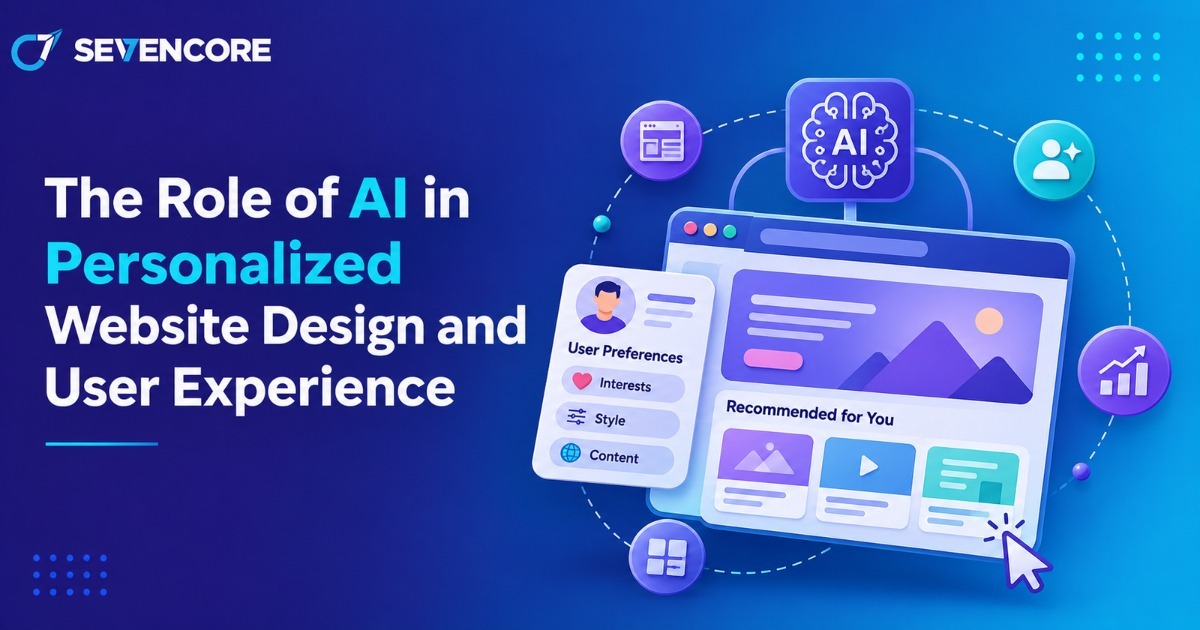
Personalization means customizing the website experience depending on visitor interests, preferences and interactions. This means that the e store can suggest items based on the visitor’s past search, or a service company can provide information based on the visitor’s industry.
It’s all about keeping things simple – showing visitors relevant information rather than making them all go through the same experience.
7 Ways AI Improves Personalized Website Design and User Experience
Personalized Website Content and Recommendations
AI may show relevant articles, items, products, and offers depending on the interests of the visitors. For instance, if a customer visits an online store website, he or she may be shown some recommendations concerning the previously viewed products. It helps visitors find relevant information without extra effort.
AI Powered User Behavior Analysis
Learning how users engage with your website is vital in ensuring its efficiency. AI can help you analyze clicks, user behavior, sessions, and popular pages on your website.
Your organization will benefit from such knowledge by determining difficult parts of the website, understanding their users’ needs, and making necessary changes.
Intelligent Website Layout and Design Suggestions
AI software is able to provide suggestions for designing page layout, color schemes, structure and other visuals depending on design specifications.
For instance, a business website will be better served with highlighting services and contact details of the firm, whereas the website of an online store should focus more on products. This can be very useful for developers to save their time.
AI Chatbots for Better Customer Interaction
Chatbots in AI assist people in getting their queries solved without having to wait until a customer service representative becomes available. The chatbot can answer common questions, offer explanations for various services and even suggest relevant web pages.
For organizations that receive customer queries after office hours, there is the chatbot option too.
Personalized Calls to Action
Not all users are prepared to make a purchase right away. AI may come in handy here by allowing companies to suggest relevant actions to the user depending on his or her behavior.
For instance, a new user will see a possibility to download a guide on the service, whereas the person having looked at the pricing would be offered to book a consultation.
AI Based Search and Navigation
AI powered search can discern the context of a visitor’s query rather than simply matching keyword searches. This feature can be used to recommend relevant pages.
It can be especially useful for websites having large catalogs of products or services or any large information base.
Accessibility and User Experience Improvements
There is software that uses AI technologies to find usability issues, check if there are missing alt tags on images and possible accessibility problems. Automated checking can be quite helpful, but testing by hand should be done nonetheless. Compliance with accessibility standards ensures better usability for all sorts of users.
How AI Helps Businesses Understand Website Visitors
AI gives companies better insight into how visitors use their website.
Analyze Customer Behavior and Preferences
A company can review visitors’ browsing history, searching and interaction patterns to know what the visitors like.
Identify High Engagement Website Pages
Analytics by AI helps determine which pages draw attention and which have a higher exit rate. In such a case, the company knows where to focus its efforts on improvement.
Understand Visitor Journey and Navigation Patterns
With the way visitors navigate from one page to another being known, a company can reduce unnecessary navigation steps that lead to an inquiry or purchase.
Deliver Relevant Content to Different Audiences
In case of multiple audiences being served, a company can provide information based on different audiences.
Benefits of AI in Personalized Website Design
A good AI approach can bring tangible benefits to various parts of a company’s website.
Improved User Engagement
Useful recommendations and content will motivate people to view more pages and interact with the website.
Better Website Navigation
Efficient search and navigation tips will allow people to find what they need in just a few clicks.
Increased Conversion Opportunities
Useful recommendations and timely CTA can help those who are interested in taking certain actions.
More Relevant Customer Experiences
Personalized websites can help companies reach out to their audiences more efficiently.
Time and Cost Efficiency in Website Development
AI assisted workflows can accelerate research, organization of content, design tips, and testing. As a result, developers can spend more time on strategy and quality.
Best Practices for Using AI in Website Design and UX
Unplanned adoption of AI solutions can lead to complications that do not need to happen. Companies must consider these guidelines:
Understand Your Target Audience
Before applying AI, define customer needs, most frequent requests, browsing patterns, and goals of your company.
Choose the Right AI Website Design Tools
Choose software to fit your needs. You will have options like data analysis, chatbots, recommendations, and help with design.
Focus on Mobile-Friendly Experiences
Ensure that the personalized solutions function properly on smartphones, tablets, and computers.
Maintain Website Speed and Performance
Do not include unnecessary elements such as extra scripts and features slowing down the loading of the web page. The quality experience also includes efficiency.
Combine AI Insights With Human Design Expertise
Artificial intelligence can detect the patterns and suggest improvements. However, human ideas, knowledge of the brand, and professionalism will still be required.
Test and Improve Website Experiences Regularly
Use A/B testing and user feedback to test out the solution and improve it. Also, do not forget about users’ privacy.
The Future of AI in Website Design and User Experience
Web development in the future is likely to become smarter and more adaptable. There are some website design trends that will contribute to the mentioned shift.
AI based conversational interfaces will provide visitors with an opportunity to interact with websites more naturally. AI predictive systems will even be able to offer some information before visitors start searching for it. AI enabled responsive design will also allow teams to adjust websites depending on the size of screens.
In addition, businesses will have to take care of transparency, accessibility, data protection, and user control. The most successful websites will not only employ more AI technologies but also solve customer problems through them.
Conclusion
With the help of artificial intelligence, there have been many chances created by which businesses could make their websites useful and user friendly. It would allow them to do many useful things such as analyzing visitor behaviors, navigating through websites, and providing recommendations for better usability and experience.
But all these would not be enough, since a business will have to combine all these qualities with creativity and knowledge about customers.
Are you looking to have your very own website? Then meet SevenCore who are willing to help you in website design and development.
FAQs
1. How Is AI Used in Website Design?
AI supports website creation through layout suggestions, behaviour analysis, content recommendations, automated testing, and chatbot integration.
2. Can AI Personalize Website Experiences for Different Users?
Yes. AI can analyse visitor interactions and preferences to display relevant content, product recommendations, and offers. Personalisation should always respect privacy and user consent.
3. How Does AI Improve Website User Experience?
It helps visitors find relevant information faster through smarter search, personalised recommendations, improved navigation, and automated customer support.
4. What Are the Benefits of AI-Powered Website Design?
Key benefits include better engagement, more relevant content, improved navigation, efficient development workflows, and additional conversion opportunities.
5. Can AI Replace Human Web Designers?
No. AI can automate repetitive tasks and support design decisions, but human designers remain important for creativity, brand identity, accessibility, and understanding customer needs.