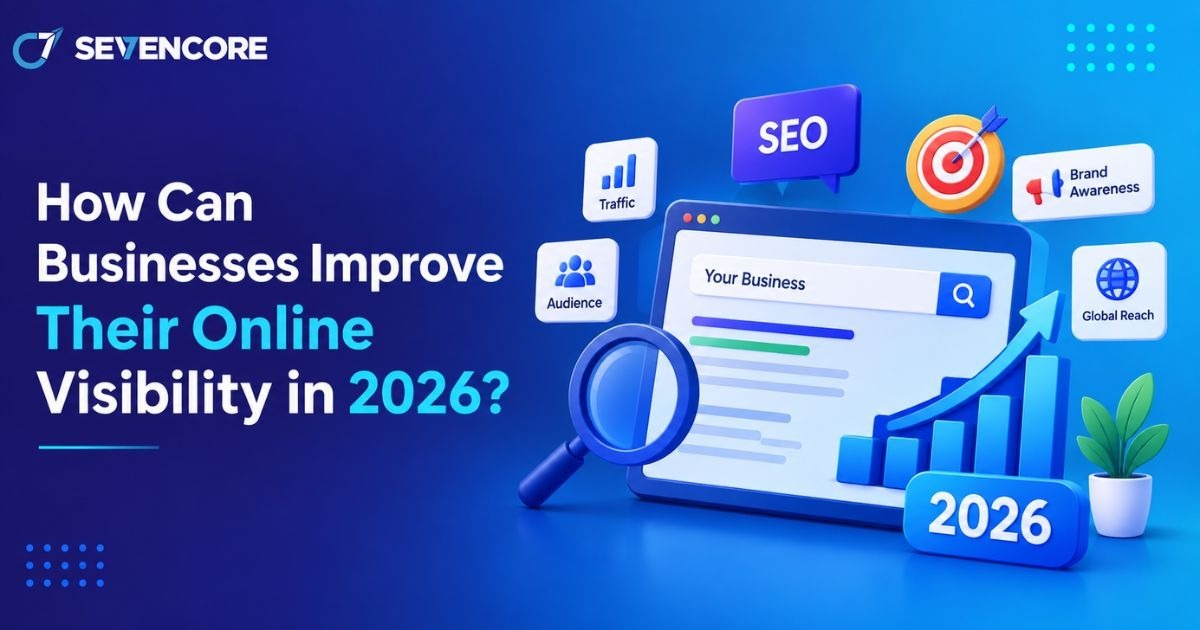
Online visibility in 2026 is no longer just about ranking on Google. It now includes how your business shows up in AI generated answers, voice search, local map packs, and social discovery feeds. Businesses that want to be found consistently need a strategy that blends traditional SEO with newer disciplines like Answer Engine Optimization (AEO) and Generative Engine Optimization (GEO).
Businesses can improve their online visibility in 2026 by strengthening technical SEO, publishing genuinely helpful content, optimizing for AI search engines and voice assistants, maintaining an active Google Business Profile, earning quality backlinks, and staying consistent across social and local platforms. Working with an experienced digital marketing agency in Ahmedabad can help businesses execute this strategy efficiently rather than piecing it together inhouse.
This guide breaks down exactly what’s changed, what still works, and the practical steps you can take starting today.
Why Online Visibility Looks Different in 2026-2027
Search behavior has shifted significantly over the past few years. People increasingly ask questions directly to AI tools like Google’s AI Overviews, ChatGPT, and Perplexity instead of scrolling through ten blue links. At the same time, traditional search engine fundamentals — site speed, mobile usability, and helpful content — still matter enormously.
Google has been explicit that its core ranking systems reward content that demonstrates genuine expertise and firsthand experience rather than content built purely to rank. Its own guidance emphasizes creating content for people first, not search engines, while still following technical best practices.
This means visibility today requires two things working together:
- A technically sound, well structured website that search engines and AI crawlers can easily understand.
- Content that answers real questions clearly enough that both humans and AI systems can extract and cite it.
Core Strategies to Improve Online Visibility
- Content Marketing
Creating useful, relevant, and audience focused content is one of the strongest ways to improve online visibility. Businesses should publish content that addresses real customer questions, provides original insights, and demonstrates expertise.
Practical steps:
- Create informative blog posts, guides, case studies, and FAQs.
- Use clear, question based headings and answer first content.
- Include original data, examples, and practical insights.
- Optimize content around relevant search intent and keywords.
- Create content that can be repurposed across social media and paid campaigns.
- Use PPC search term data to identify topics and questions that potential customers are actively searching for.
- Social Media Marketing
An active social media presence helps businesses increase brand awareness, engage their target audience, and distribute content across multiple channels. Choose platforms based on where your audience is most active and maintain a consistent publishing schedule.
Practical steps:
- Maintain active LinkedIn, Instagram, YouTube, Facebook, or other relevant profiles.
- Share educational content, industry insights, videos, and customer success stories.
- Encourage comments, shares, and other forms of engagement.
- Repurpose website content into social posts and shortform videos.
- Use paid social campaigns to extend the reach of high performing content.
- Retarget users who have previously interacted with your website or content.
- Online Advertising / PPC
Paid advertising provides businesses with an immediate opportunity to appear in front of people actively searching for their products or services. PPC can complement organic SEO by targeting high intent keywords while providing valuable data about customer behavior.
Practical steps:
- Create targeted Google Ads campaigns around high intent keywords.
- Use location, audience, device, and demographic targeting where appropriate.
- Develop dedicated landing pages for PPC campaigns.
- Match ad copy closely with the user’s search intent and landing page content.
- Test different headlines, descriptions, offers, and calls to action.
- Track CTR, CPC, conversions, cost per lead, and ROAS.
- Use PPC search query data to identify valuable keywords for SEO and content creation.
- Retarget previous website visitors to increase conversion opportunities.
- Search Engine Optimization (SEO)
SEO improves a website’s ability to appear organically when potential customers search for relevant products, services, or information. A strong SEO strategy should cover technical performance, content quality, authority, local visibility, and emerging AI search experiences.
Practical steps:
- Improve website speed, mobile usability, and Core Web Vitals.
- Fix broken links, redirect chains, indexing, and crawlability issues.
- Optimize title tags, meta descriptions, headings, URLs, and internal linking.
- Use structured data to help search engines understand the content.
- Build relevant, high quality backlinks and digital PR.
- Optimize Google Business Profile for local searches.
- Create location specific content where relevant.
- Optimize content for AEO and GEO to improve visibility in AI powered search experiences.
- Use PPC keyword and conversion data to strengthen organic SEO targeting.
How a Digital Marketing Agency Can Help
Executing all of the above consistently — technical audits, content strategy, local SEO, link building, and AI search optimization — takes time, tools, and specialized expertise that many in house teams don’t have bandwidth for.
A specialized digital marketing agency can audit your current online presence, identify visibility gaps, and build a prioritized roadmap covering SEO, content, local search, and paid visibility where needed. If you’re exploring options, you can learn more about how digital marketing solutions approach visibility, search, and growth for businesses across industries.
Final Thoughts
Improving online visibility in 2026 isn’t about chasing a single algorithm update — it’s about building a website and content ecosystem that’s genuinely useful, technically sound, and easy for both people and AI systems to understand. Businesses that combine strong fundamentals with newer AEO and GEO practices will be better positioned to stay visible as search continues to evolve.
If you’re ready to build a clear, results driven visibility strategy, partnering with an experienced digital marketing agency can help you move faster and avoid common missteps — explore Sevencore’s digital marketing services in Ahmedabad to see how a tailored approach could work for your business.
Frequently Asked Questions
1. What is the difference between SEO and AEO?
SEO focuses on ranking web pages in traditional search results, while AEO (Answer Engine Optimization) focuses on getting content selected as a direct answer in voice search, featured snippets, and AI generated responses.
2. How long does it take to improve online visibility?
Timelines vary based on competition and current site health, but most businesses start seeing measurable improvements within 3–6 months of consistent SEO and content work.
3. Is Google Business Profile still important in 2026?
Yes. It remains one of the most influential factors for local search visibility, especially for businesses targeting customers in a specific city or region.
4. Can small businesses compete with larger companies for online visibility?
Yes, particularly through local SEO, niche content, and consistent digital presence, which often let smaller businesses outrank larger competitors for locally relevant searches.
5. Do I need a digital marketing agency, or can I do this inhouse?
It depends on your team’s bandwidth and expertise. Many businesses start inhouse and later partner with an agency once they need consistent execution across SEO, content, and technical optimization.
References
- Google Search Central — Creating Helpful, Reliable, People First Content
- Google Search Central — Mobile First Indexing Best Practices
- Google Business Profile Help — Improve Your Local Ranking