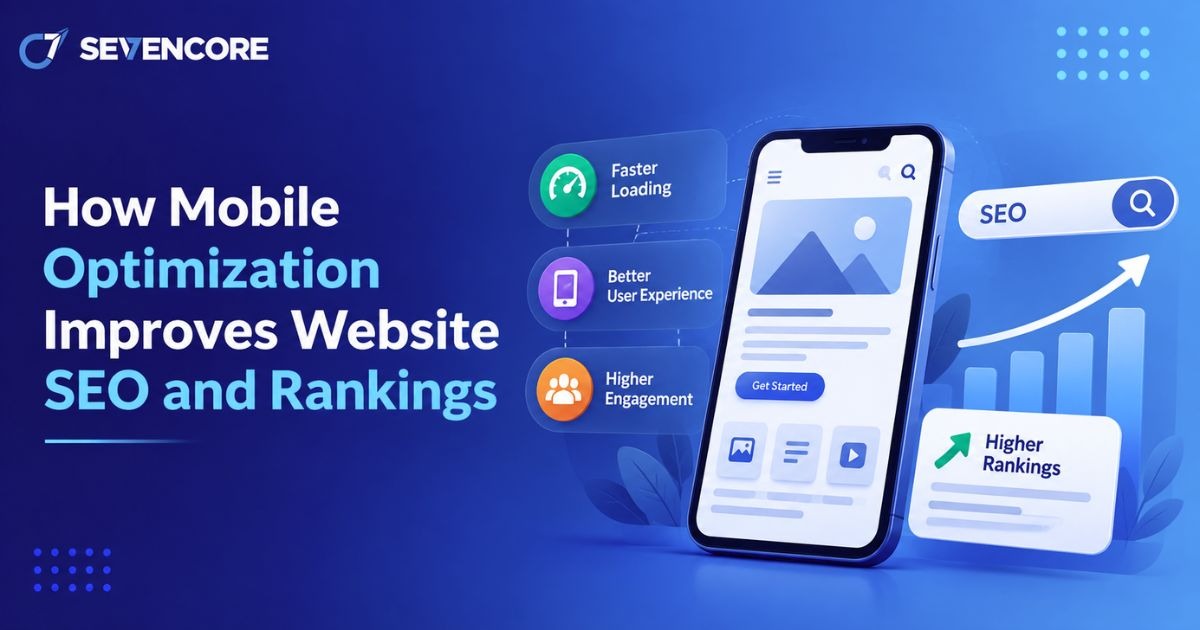
Mobile-first indexing stopped being a transition years ago and became the permanent reality of how Google ranks every website. Mobile devices now generate more than 63% of all global website traffic, and Google’s mobile-first indexing applies to 100% of websites, meaning the mobile version of a site, not the desktop version, is what determines its ranking. Sites rated “good” on Core Web Vitals convert 24% better than those rated “poor,” and a single one-second delay in mobile load time can cut conversions by as much as 20%. For any business still treating mobile as a secondary consideration behind desktop design, these numbers make the cost of that decision explicit rather than theoretical.
What Mobile-First Indexing Actually Means
Mobile-first indexing means Google’s crawler primarily evaluates the mobile version of a website’s content, structure, and speed to determine how that site ranks, across every device, not just mobile searches.
The Core Mechanics of Mobile-First Indexing
- Googlebot accesses and evaluates the mobile version of a page as the primary basis for ranking decisions
- If mobile content, structure, or speed is inferior to the desktop version, overall rankings suffer even for desktop searchers
- This applies universally now, meaning no website is exempt regardless of its primary audience or industry
Why Mobile Performance Directly Shapes Search Rankings
Google treats several mobile-specific signals as direct ranking factors rather than secondary quality indicators, which means mobile performance issues translate into measurable ranking losses.
- Core Web Vitals, including Largest Contentful Paint, Interaction to Next Paint, and Cumulative Layout Shift, are official ranking factors evaluated primarily through the mobile experience
- Pages should load in under three seconds for optimal mobile SEO performance, with Largest Contentful Paint ideally occurring within 2.5 seconds
- Real-world cases show rankings dropping from position two to position fifteen overnight after a mobile-specific change, such as hiding content to save screen space, without any change to the desktop version
The Conversion Cost of Poor Mobile Experience
Ranking impact is only part of the story. Mobile performance also directly affects whether visitors who do arrive actually convert once they land on a page.
- A one-second delay in mobile load time can reduce conversions by roughly 20%, while shaving just 0.1 seconds off load time can boost conversions by 8.4%
- Websites with poor mobile experiences see bounce rates up to 40% higher than well-optimized sites
- 53% of mobile users abandon a site entirely if it takes longer than three seconds to load
Technical Foundations of Mobile Optimization
Strong mobile SEO rests on a specific set of technical fundamentals that need to be addressed together, since weakness in any one area can undermine the others.
Core Technical Requirements
- Responsive design that adapts layout, images, and navigation cleanly across screen sizes, rather than a shrunk-down version of a desktop layout
- A mobile DOM that matches the desktop version closely, since content hidden or removed on mobile is effectively invisible to Google’s indexing process
- Fast-loading JavaScript and CSS that render efficiently even on older devices and slower mobile connections
- Properly configured viewport settings that prevent users from needing to pinch or zoom to read content comfortably
Content Structure Built for Mobile Screens
Mobile screens demand a different content approach than desktop pages, since large blocks of unbroken text are far more likely to cause visitors to bounce back to search results.
- Break content into short paragraphs and scannable subheadings rather than long, dense blocks of text
- Use bullet points to present lists, comparisons, or steps, since these are significantly easier to scan on a small screen
- Keep calls to action visible and easy to tap without requiring precise, small-target interactions
- Prioritize the most important information near the top of the page, since mobile users scroll and skim more aggressively than desktop visitors
Mobile Optimization and Local Search Performance
For businesses serving a specific geographic area, mobile optimization and local search visibility are deeply connected, since the majority of local searches now happen on a phone, often while someone is already out and near a business.
- Google Business Profile optimization, LocalBusiness schema, and click-to-call functionality are essential conversion elements for any business with a physical location
- Mobile traffic for local, retail, and consumer-facing categories exceeds 75% of total traffic, well above the general web average
- A slow or poorly structured mobile experience undermines even a well-optimized local search presence, since visitors who reach the site still need to convert once they arrive
Businesses working with local SEO services in Ahmedabad should treat mobile performance as inseparable from local visibility efforts, since strong local rankings deliver little value if the mobile experience itself drives visitors away before they take action.
Also Read: Local SEO Strategies to Grow Your Service Business in India
Mobile Optimization’s Growing Role in AI Search Visibility
AI-powered search tools increasingly fetch and evaluate content through fast, accessible mobile interfaces, which means a poorly optimized mobile site can quietly limit visibility in AI-generated answers as well as traditional search results.
- AI search engines rely on the same rendered content and page structure that mobile-first indexing evaluates, meaning mobile weaknesses affect both traditional rankings and AI citation potential
- Sites with strong Core Web Vitals and clean mobile rendering are better positioned for both traditional search rankings and generative search visibility
- Content structured clearly for mobile scanning, short sections, clear headings, direct answers, also tends to be easier for AI systems to extract and cite accurately
Common Mobile Optimization Mistakes That Hurt Rankings
Several recurring mistakes continue to quietly damage rankings even on sites that appear well-optimized on the surface.
- Blocking JavaScript, CSS, or image resources from Googlebot through robots.txt settings, preventing accurate mobile rendering
- Hiding content on mobile to save screen space, which can remove that content from Google’s indexing entirely
- Treating mobile as a scaled-down afterthought rather than designing the mobile experience as the primary version of the site
- Ignoring mobile-specific Core Web Vitals data in Google Search Console, since desktop performance numbers alone do not reflect the mobile experience Google actually evaluates
Choosing the Right Partner for Mobile-First Web Development
Given how deeply mobile performance now intertwines with SEO outcomes, the technical execution of a website build matters as much as its visual design. Working with the best website development service provider for your specific platform ensures mobile performance and SEO fundamentals are built in from the start, rather than retrofitted after a site already underperforms in mobile-first indexing.
- Confirm any development partner tests Core Web Vitals specifically on mobile devices and slower network conditions, not just desktop browsers
- Ask how responsive design decisions are validated against real mobile rendering, not just visual appearance in a browser resize test
- Prioritize partners who treat mobile SEO as a core requirement of the build rather than a separate optimization phase handled later
Evaluating Agencies for Mobile SEO Expertise
Not every web development or marketing partner treats mobile optimization with the technical rigor it now requires, which makes vetting this specifically worthwhile before committing to a project. When evaluating the best agency for website development for a mobile-first rebuild, ask directly how they approach Core Web Vitals, responsive design testing, and mobile-specific content structure, since these questions quickly separate agencies with genuine mobile SEO expertise from those treating it as an afterthought.
Frequently Asked Questions
Does mobile optimization affect desktop search rankings too?
Yes. Since Google’s mobile-first indexing evaluates the mobile version of a site as the primary basis for ranking, a weak mobile experience can suppress rankings across all devices, including desktop searches.
What is considered a good mobile page load time in 2026?
Mobile pages should generally load in under three seconds, with Largest Contentful Paint ideally occurring within 2.5 seconds, to align with Google’s Core Web Vitals thresholds and avoid high abandonment rates.
Is responsive design enough for good mobile SEO, or is more required?
Responsive design is a necessary foundation, but mobile SEO also requires fast load times, a mobile DOM that matches desktop content, and content structured specifically for scanning on smaller screens, not just a layout that resizes correctly.
Building a Mobile Optimization Checklist
- Test Core Web Vitals specifically on mobile using Google Search Console’s mobile usability report
- Confirm no content is hidden or blocked from Googlebot on the mobile version of key pages
- Break long-form content into short paragraphs, bullet points, and clear subheadings
- Verify click-to-call, maps integration, and local schema are functioning correctly on mobile for location-based businesses
- Re-test page speed after any significant design or content change, since even small additions can affect mobile load time
Conclusion
Mobile optimization has moved from a nice-to-have enhancement to the primary determinant of search visibility, since Google now evaluates every website through its mobile version first. The data is consistent across every recent study: faster mobile pages rank higher, convert better, and increasingly influence visibility in AI-generated search results as well. Businesses that treat mobile as the default design priority, rather than an afterthought layered onto a desktop-first build, are the ones positioned to benefit as mobile’s share of search continues to grow through 2027 and beyond.