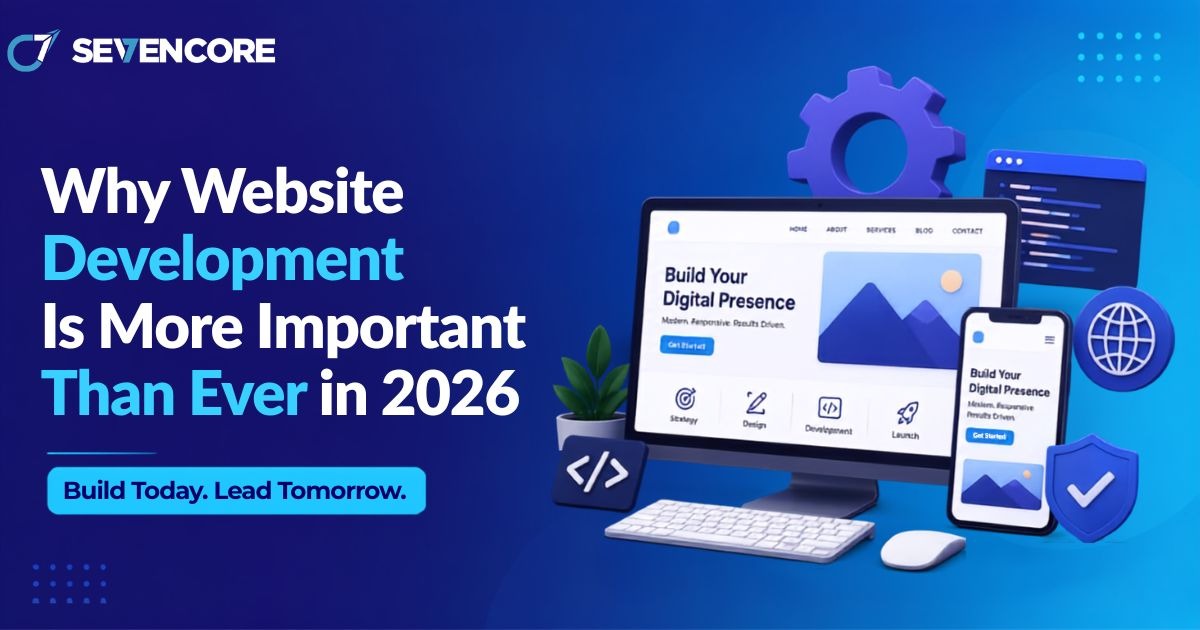
Search has changed more in the last two years than in the previous decade. Zero-click search now accounts for roughly 60% to 68% of all Google queries, according to recent SparkToro and Similarweb research, meaning most users get their answer before ever visiting a website. When AI Overviews appear on a search results page, that zero-click rate jumps to nearly 83%. This shift is why website development is more important than ever in 2026. The rules of visibility have changed because answer engines and generative AI tools now decide which sites get seen, cited, and trusted. This post breaks down what has changed, why strong web development matters more than it used to, and how you can build a site that performs well for both human visitors and the AI systems now standing between you and them.
➤ What’s Different About Websites in 2026?
Traditional SEO focused on ranking in ten blue links. That model is fading. Today, success depends on how well a site earns visibility inside AI-generated answers, a discipline generally called Answer Engine Optimization. At the same time, Generative Engine Optimization has emerged as a parallel practice focused specifically on how content gets pulled into tools like ChatGPT, Perplexity, and Google’s AI Overviews.
A few shifts define this new landscape:
- Search behavior has moved from scrolling through links to reading a single AI-generated summary
- Websites must now be readable by machines as well as humans, with clean structure and semantic markup
- Zero-click searches are rising fast, so a site’s job is increasingly to earn a citation rather than a click
This is the environment modern website development has to work within. A site that looks good but ignores machine readability will struggle to get noticed by the tools shaping today’s discovery.
➤ Why Website Development Matters More Than Ever
➥ Websites Are Now the Source of Truth for AI Models
Large language models don’t invent facts about your business. They pull from content that already exists on the web, and they favor sources that are clearly organized. A site with confusing navigation, vague headings, or no clear structure gives an AI model little to work with.
- Clean heading hierarchies help models identify what a page is actually about
- FAQ sections formatted as direct questions and answers are easier for AI systems to extract and cite
- Schema markup gives structured signals that reduce ambiguity for crawlers and LLMs alike
➥ Speed and Technical Performance Impact AI Crawling
Core Web Vitals still matter, not just for human visitors but for the bots and crawlers that feed data into AI systems. A slow, bloated site is harder to crawl efficiently and less likely to be indexed thoroughly.
- Fast load times reduce crawl abandonment and improve user retention
- Mobile-first design matters since the majority of searches now happen on mobile devices
- Clean, semantic HTML makes it easier for both search engines and AI models to parse page content
➥ Trust Signals Matter More in an AI-Filtered World
When an AI model summarizes information instead of sending a user to your page, your credibility has to be established before that moment happens. This is where E-E-A-T, meaning Experience, Expertise, Authoritativeness, and Trust, becomes central to good web development.
- Author bios with real credentials build confidence for both readers and algorithms
- Transparent sourcing and citations signal reliability
- Consistent, verifiable information across your site strengthens authority over time
➥ First-Party Data and Direct Customer Relationships
As AI-generated answers absorb more traffic, owning a direct relationship with your audience becomes a competitive advantage. Traffic you don’t control can disappear overnight, but an email list or community you’ve built stays yours.
- Newsletters keep you connected to visitors even if search traffic declines
- Gated content encourages direct engagement instead of one-time visits
- Clear calls to action turn casual readers into long-term contacts
➤ How to Build a Website That’s AEO, GEO, and LLM Ready
➥ Structure Content for Extraction
AI systems favor content that is easy to break into digestible pieces. That means using a clear H2 and H3 hierarchy, keeping paragraphs short, and relying on bullet points where appropriate. FAQ sections written as direct question-answer pairs are particularly effective, since they mirror how people phrase queries to AI assistants.
➥ Use Structured Data
Schema markup remains one of the most underused tools in modern web development. Implementing FAQPage, HowTo, Organization, and Article schema gives search engines and AI crawlers explicit signals about what your content covers, which increases the odds of being cited accurately.
➥ Optimize for Conversational Queries
People no longer type short keyword fragments into search bars the way they once did. Instead, they ask full, natural questions to AI assistants. Writing content that mirrors this conversational tone, rather than stiff keyword phrases, aligns better with how modern search actually works.
➥ Prioritize Technical Fundamentals
None of this works without a solid technical foundation. Crawlability, a properly configured sitemap, a clean robots.txt file, HTTPS, and full mobile responsiveness remain non-negotiable basics of good website development.
➤ Common Mistakes to Avoid
- Prioritizing keyword density over clarity and readability
- Ignoring structured data entirely
- Launching a slow, visually cluttered site that frustrates both users and crawlers
- Skipping FAQ or direct Q&A content that AI systems rely on for extraction
➤ Quick Checklist: Is Your Website Ready for 2026?
- Fast load speed across devices
- Fully mobile-optimized layout
- Schema markup implemented sitewide
- FAQ section with direct, extractable answers
- Clear author bios and trust signals throughout
Conclusion
Website development is more important than ever in 2026 because the destination for information has shifted from the open web to AI-generated answers. Sites that are fast, well-structured, and rich in trust signals are the ones most likely to be cited by the tools now standing between businesses and their audiences. Looking ahead, the sites that treat AEO and GEO as core parts of development, not afterthoughts, will be the ones that stay visible as search continues to evolve. If your website isn’t built for this new reality yet, now is the time to start.
➠ FAQ Section
1. What is GEO in website development?
Generative Engine Optimization refers to the practice of structuring and writing content so that generative AI tools, such as ChatGPT or Google AI Overviews, are more likely to surface and cite it in their responses.
2. Do I still need SEO if I’m optimizing for AI search?
Yes. Traditional SEO fundamentals like technical performance, clean structure, and authoritative content still form the foundation that AEO and GEO strategies build on.
3. How long does it take to see results from website optimization in 2026?
Timelines vary, but most sites begin seeing measurable improvements in AI visibility and organic performance within three to six months of consistent optimization.
4. What’s the difference between AEO and traditional SEO?
Traditional SEO focuses on ranking in search results, while Answer Engine Optimization focuses specifically on being selected as the source for a direct AI-generated answer.
5. Why does zero-click search matter for my business?
If most searches never result in a click, visibility increasingly depends on being named or cited inside the answer itself, not just ranking on a results page.
➠ Sources
-
- SparkToro, In 2026, Less than One Third of Google Searches Still Send a Click
- Search Engine Land, Google zero-click searches reach 68% in early 2026
- Similarweb, Zero-Click Marketing: The SEO Strategy For A World Where Most Searches Skip Your Site
- Ekamoira, 60% of Searches Get Zero Clicks: How to Win in 2026
- Digital Applied, Zero-Click Search Statistics 2026: Complete Data Guide
- Statista, Google search queries with zero clicks in the United States 2016 to 2026